Recital or Chamber Concert: Choosing the Room for Your Attention
Compare a recital and chamber concert by ensemble size, stage setup, and sound, then choose the format that suits your evening and find a good seat.
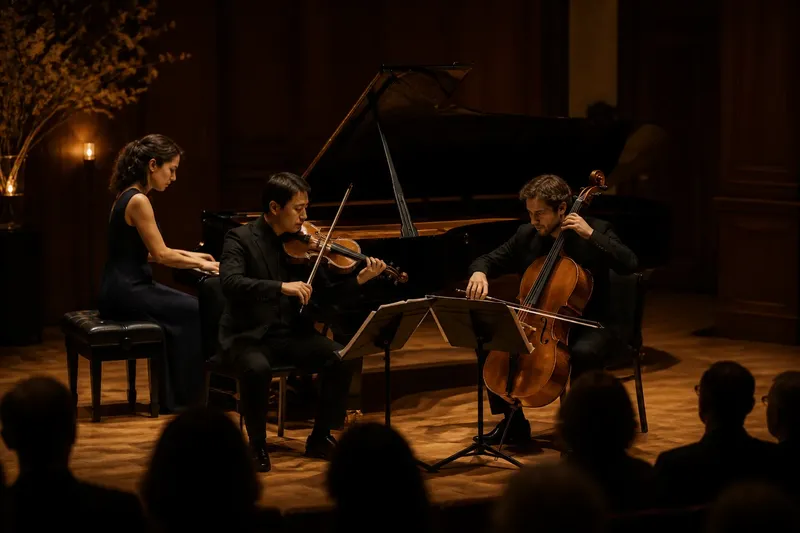
Choosing a recital or chamber concert often starts with the stage: one pianist sits at a grand piano, while a string quartet settles into a tight arc of chairs and stands. The difference is more than the number of players. A recital places the evening around a featured performer; chamber music gives several performers equal room to shape the result.
What separates a recital from a chamber concert?
A recital typically centers on one featured performer, such as a pianist, violinist, or singer. An accompanist may join, but the event is still presented around the soloist. The program can move between composers and styles, with the performer providing the thread that connects them.
Chamber music is written for a small ensemble, often a duo, trio, or quartet. The players share the musical work rather than supporting a single featured soloist throughout. A string quartet, for instance, brings together two violins, viola, and cello; a piano trio combines piano, violin, and cello.
Listings sometimes blur the distinction. A violinist and pianist may appear together in a recital, while a chamber concert may feature a single instrument in one part of its program. Check the event description and performers’ names instead of relying on the headline alone.
How do the stage and sound differ?
In a recital, the stage picture is often simple: a soloist and, if needed, an accompanist. That arrangement makes the featured performer easy to follow visually. You may also notice how a pianist’s hands shape a phrase or how a singer uses breath and posture to carry a line.
A chamber ensemble’s arrangement reflects how its members play together. Players may sit facing one another or in a shallow arc, with stands placed so they can see both the music and each other. That setup helps them coordinate entrances and balance, while giving the audience a view of the group as a unit.
The hall matters, too. In a small room, quiet details may seem close; in a larger auditorium, the sound can feel more spacious. Neither setting belongs exclusively to one format. Read the venue description and seating map if distance from the stage or a particular sightline matters to you.
Which format fits your evening?
Use the practical details of the event to narrow your choice, then consider what kind of performance you want to attend. A soloist’s name may draw you to a recital; a favorite ensemble or a particular combination of instruments may point you toward chamber music.
- Check the listing: If it names one featured soloist, consider the recital; if it names a group such as a trio or quartet, consider the chamber concert. If the description is unclear, look for the full performer roster.
- Look at the program: If the works are presented as solo pieces, the recital format may be central; if they are composed for an ensemble, the chamber format may be the focus. If both appear, read how the event describes its featured performers.
- Consider the stage view: If you want to see one performer clearly, check whether the seating map offers a direct view of the soloist. If you want to see several players, look for a seat with a view of the full stage.
- Check the venue notes: If the event is in a small hall and close seating appeals to you, that may suit either format. If a large auditorium feels more comfortable, use the venue’s seating information to choose a section rather than ruling out a recital or ensemble.
- Review access and arrival details: If the venue lists an entrance, seating, or access arrangement you need, confirm it before choosing. If the information is missing, contact the venue rather than guessing.
- Choose by the performers: If a soloist’s work interests you, the recital may be the better fit; if you are curious about an ensemble or its combination of instruments, try the chamber concert. If neither listing draws you, compare the repertoire before deciding.
Imagine you are choosing between a pianist’s solo recital and a piano trio in the same hall. You want to hear how a familiar melody is shaped, so you check the listings: the recital names the pianist and solo works, while the trio listing names piano, violin, and cello and identifies ensemble pieces. You check the seating map and find that both events use the same room, so the venue does not settle the choice. You choose the recital because the solo repertoire interests you more; the observable result is a program organized around the pianist rather than an exchange among three players. If you had wanted to hear those instruments work together, the trio would have been the more fitting option.
What questions do listeners ask before choosing?
Is a recital always a solo performance?
Not always. A recital usually centers on a featured performer, who may appear with an accompanist or in a mixed program. Check the event listing to see exactly who will perform.
Does chamber music require knowledge of the instruments?
No. The performer list can help you recognize the ensemble, but you can attend without knowing the instruments in advance. The venue program may also identify each player and work.
Can a chamber concert include a piano?
Yes. A piano trio and a piano quartet are common chamber configurations, and chamber programs can include other combinations as well. The listing should name the performers and ensemble.
Is a small venue better for a recital or chamber music?
A small venue can make either kind of concert feel close, but it is not automatically the better choice. Check the seating layout and choose based on the view and sound environment you prefer.
How can the venue help you decide?
Compare the practical details rather than treating room size as a verdict on the music. A venue’s seating map can show whether a stage is broad or intimate, while its access information can help you plan arrival and choose a suitable seat. If you need clarification about entry or accommodations, ask the venue directly.
On the night, notice the stage arrangement before the performance begins. A soloist beside an accompanist signals a different setup from a quartet seated together, but the program notes can clarify the works and performers if the format is mixed. You do not need to decode every piece to know what kind of concert you chose.
What detail can guide your next choice?
After the concert, remember something specific about the event’s format: the way one performer carried a program, the balance between a soloist and accompanist, or the sound of a trio sharing the stage. That detail gives you a useful basis for choosing another recital or chamber concert, beyond a general judgment that you liked or disliked the evening.
The recital or chamber concert distinction is clearest in the performers and the way the program is organized. For your next search, compare those details first, then use the venue information to find a setting that suits the kind of performance you want to hear.