The Familiar Composer Is Not a Listening Plan
Choosing a concert by familiar composer names? Compare the works, instruments, and sounds on the program to find an evening that suits your ears.
You recognize the composer on the poster, but the first notes arrive in a language you don’t quite know. Choosing a concert by familiar composer names can feel predictable before you’ve heard a sound. A name is a useful clue, not a listening plan: the same composer can offer a quiet stretch of concentrated music one night and a room-filling rush the next.
Instead of asking whether you know the composer, look at what the performers will play and how the music is described. The work title, instruments, and available audio can reveal more about the evening’s sound than a name alone.
What does a familiar composer’s name actually tell you?
A composer’s name points toward a body of work, not one dependable mood. A program might pair a well-known composer with a lesser-known piece, or choose a familiar work that is more restless, spare, or intricate than you expect. The title alone seldom tells you how the room will feel once the musicians begin.
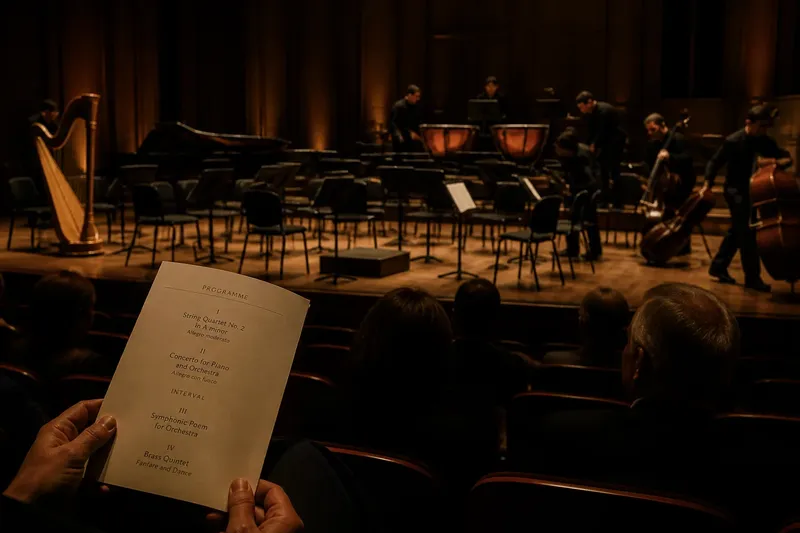
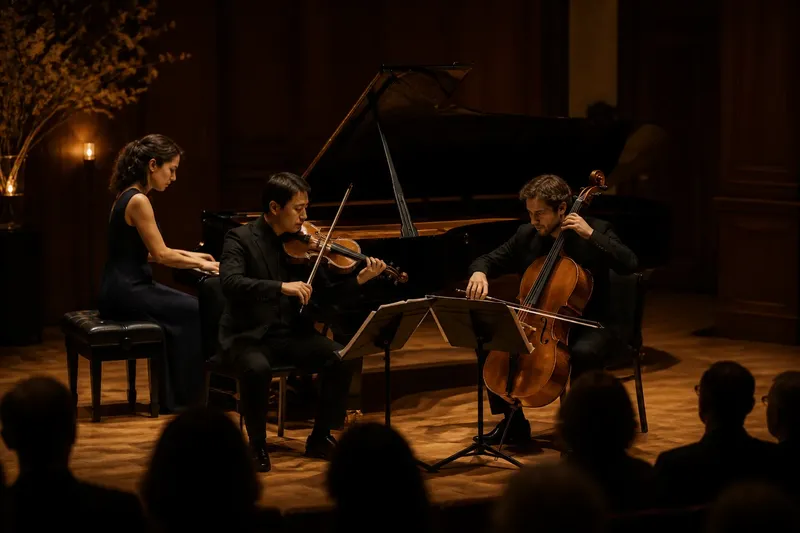
Look beyond the largest type. Read the work titles and descriptions of the performers: solo piano, string quartet, voice and orchestra, or a small ensemble with winds and percussion. These details suggest what you might hear. A piano alone leaves space around each phrase; several instruments can trade lines, overlap, or build a dense surface.
Then check whether the piece is described as lyrical, rhythmic, meditative, dramatic, or experimental. Such words are broad signposts, not promises, but they can clarify the sound the program foregrounds. If the description is brief, a short audio sample can offer a more direct impression of pace and color than another search for the composer’s biography.
Let the specific work and its sound qualify the name.
How can you choose a concert by the sound you want?
Think of listening preferences as invitations, not tests. You don’t have to catch every theme or identify each instrument to listen closely. You might follow one voice, notice when the sound grows denser, or attend to how a pulse changes.
- For a clear musical thread: If the program mentions a soloist, melody, song, or variation, then consider it if you want to follow a main line as it returns or changes; otherwise, compare a program with a more prominent rhythmic or ensemble focus.
- For changing color: If the lineup includes a mixed ensemble or orchestra, then choose it if you want to hear instruments enter, recede, and alter the texture; otherwise, look for a smaller group with fewer layers.
- For a steady physical pulse: If the notes mention dance, march, groove, or repeated rhythm, then choose that program if you want a beat to follow; otherwise, look for descriptions that emphasize sustained sound or melody.
- For stillness and detail: If the description uses words such as sparse, quiet, sustained, or reflective, then consider it if you want to notice tone and silence; otherwise, seek a program described as dramatic or rhythmically active.
- For surprise: If the program includes unfamiliar music, unusual instrumentation, or a contrast between works, then choose it if you welcome unexpected sounds; otherwise, compare the listed works for a more familiar lineup or style.
- For a close, vocal-sounding line: If a solo cello or another featured string instrument is listed, then consider it if that sound appeals to you; otherwise, check for piano, harp, or a larger ensemble that brings a different color to the foreground.
These are clues, not genre rules. A string quartet can be forceful; a large orchestra can create a moment of near-stillness. Choose a feature you’d be pleased to notice, rather than trying to predict the entire evening from a few words.
What clues help with an unfamiliar piece?
Start with the lineup. Instruments tell you what kinds of sound may take the foreground: a solo cello can make a line feel close and vocal, while a harp or piano may make rhythm and resonance especially noticeable. A lineup is useful even when the composer’s name and piece title mean nothing to you.
Next, check the work’s form if the program lists it. A concerto places a soloist in conversation with an ensemble; a sonata commonly centers on one or two performers; a song cycle links vocal pieces into a larger sequence. These labels help you understand the relationships onstage, but you don’t need to know technical vocabulary once the music starts.
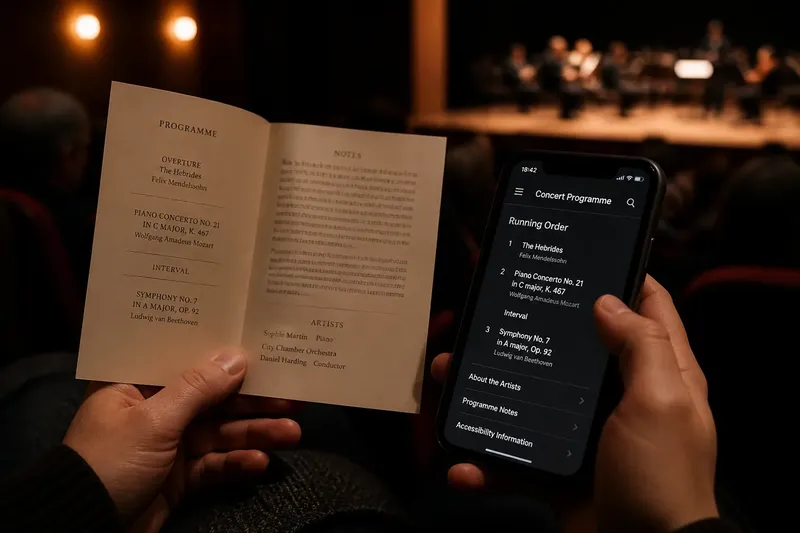
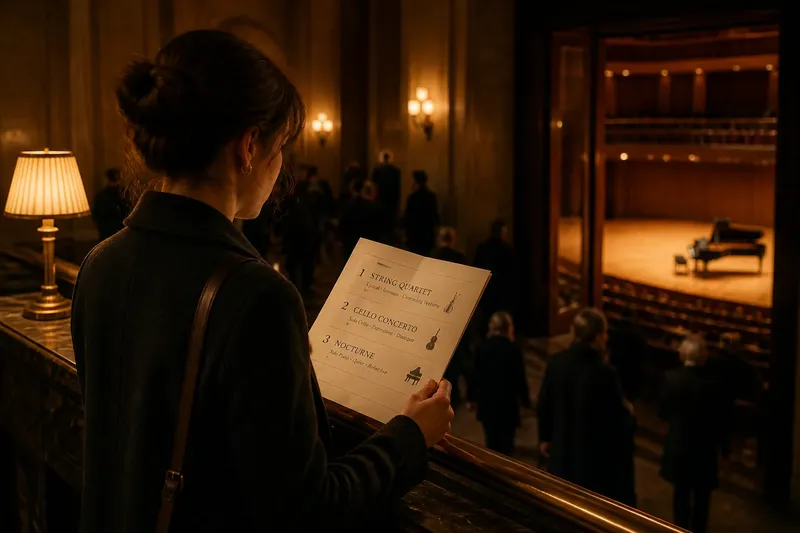
Pay attention to the running order, too. A program may place a short work before a longer one, or move from a small ensemble to a larger group. That can give your ears time to adjust to a new sound. Don’t assume the piece you recognize will be easiest to follow; another work may have a clearer texture or more immediate pulse.
If the program lists an unfamiliar title, try a short excerpt rather than memorizing the whole piece in advance. Stop when you have a basic impression of its sound. The live performance will have its own pace and scale, and it’s fine to meet the music there.
What do concert descriptions leave unanswered?
Does a familiar composer mean a familiar sound?
Not necessarily. A composer may have written music with sharply different textures, moods, and performing forces, so the specific work matters more than name recognition.
Can I enjoy a piece without knowing its story?
Yes. You can listen for a recurring melody, a change in volume, or the entrance of a new instrument without knowing the piece’s background.
Should I listen to recordings before the concert?
A brief excerpt can help you recognize the instruments or general character, but preparation is optional. Leave room for the live sound to be your first full encounter.
What if I lose track of the music?
Choose one audible feature to follow, such as the bass line, the beat, or the shift between loud and soft. You can return your attention at any point; there’s no need to reconstruct what you missed.
How do you compare two concerts on a crowded calendar?
Imagine you’re choosing between two concerts. The first lists a composer you know and a dense orchestral work; the second features an unfamiliar composer and a solo piano piece described as quiet and reflective. You want to follow a single line after a tiring day. First, you note that the piano program foregrounds one performer and a restrained sound. Then you compare that with the orchestra’s layered texture and consider whether you have the energy for a more expansive sound. You choose the piano concert because its stated character fits what you want to hear; if you had wanted shifting layers and a larger ensemble, the orchestra would have been the better match. The decision rests on the listed works and sounds, not on which composer’s name seems safer.
Use the venue’s program page to compare the full list of works, performers, and descriptions. If those details are sparse, contact the box office or presenter to ask which instruments are featured or whether the event includes spoken introductions. You’re gathering clues about the evening, not asking someone else to decide whether you’ll like the music.
Consider your energy as well as your taste. A long, concentrated program may suit an evening when you can settle in; a shorter event or one with contrasting pieces may feel more inviting when you want variety. Check the running order and any announced interval to understand the shape of the concert.
When choosing a concert by familiar composer names, let the work, performers, and sound description guide you alongside recognition. Before you go, choose one thing to listen for: a returning tune, the handoff between instruments, or the way silence changes the room. That gives your attention a starting point, even when the music is entirely new.