Why a Concert Programme Puts One Piece Before Another
Concert programme order can shape transitions and leave a lasting final impression. Learn how to read the sequence without assuming every placement tells a story.
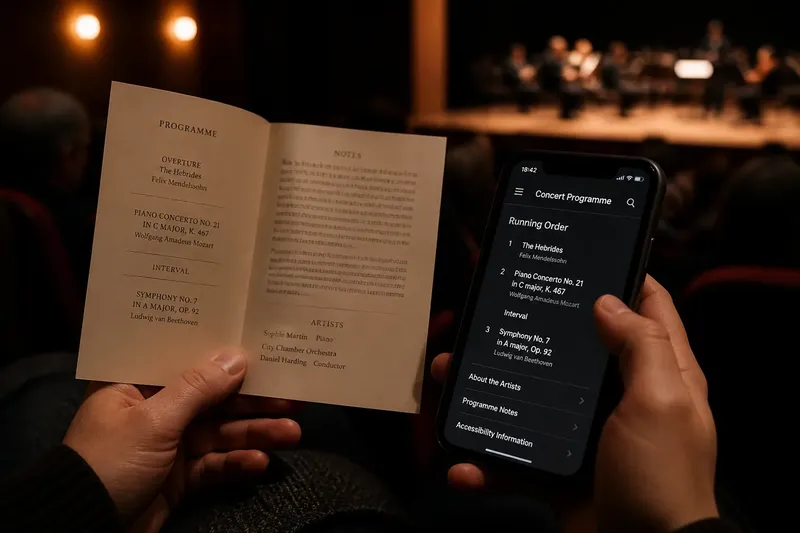
Why does concert programme order put one piece before another? The answer may be practical, artistic, or a little of both: a change of performers, a shift in scale, or a final work that leaves the hall in a particular mood. The printed sequence offers clues, but it does not disclose every decision behind the evening.
Rather than tracking contrasts between the music, consider the sequence as a set of stage changes. The order affects when musicians enter, leave, and reset; it can also determine whether the audience hears an uninterrupted span or a clear break. Those visible transitions are part of how a concert is built.
What does the running order tell you about the stage?
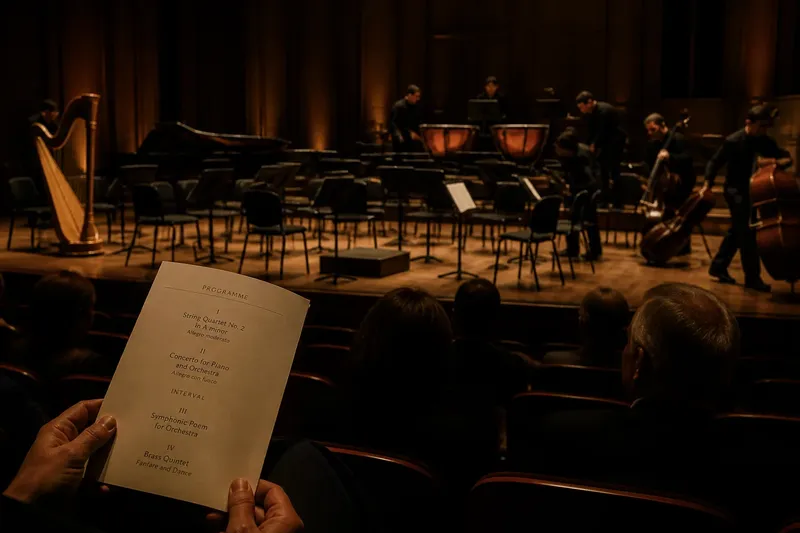
Look at the performers listed for each work. A soloist may appear for one piece and leave afterward; a choir or a large group of musicians may need time to assemble or clear the platform. The order can make those changes manageable while keeping the evening moving.
Instrumentation offers another clue. A work for a small group may use a compact setup, while a later piece might call for additional chairs, stands, percussion, or a different arrangement of the orchestra. A change in forces can explain why stagehands or performers need a moment between works, though it cannot establish the organizers’ full reasoning.
Notice the stage before and after a work. If the layout changes, the next piece may require a different arrangement rather than a new interpretation of what came before.
Why might the interval fall where it does?
An interval divides the event into practical blocks as well as musical ones. Performers may need time to reset, the audience needs a chance to leave the hall, and a large stage change may be easier to manage during a break than in a short pause.
The program’s printed division can help you anticipate when to find the lobby or return to your seat. It also gives you a natural point to check the schedule, stretch, or read a note you skipped earlier. If there is no interval, a brief pause may still allow performers to change places or instruments.
Say you see a brass ensemble listed after a work requiring a full orchestra. Imagine that the orchestra clears the platform during the interval, leaving room for the smaller group’s different setup. The observable result is a changed stage and a straightforward transition; the sequence alone does not reveal whether that practical need was the only reason for the placement.
Does a final work have to provide a grand ending?
No. A final selection might be brief, quiet, ceremonial, or simply the last item on the schedule. Its placement tells you where the concert ends, not necessarily that it summarizes everything heard earlier.
Applause and bows follow the music, but they are event conventions rather than evidence of a hidden program design. If performers leave and return, or if the stage is reset, those changes may clarify whether another selection is planned. The program and announcements are more reliable guides to what comes next than guessing from the sound of the ending.
What do readers ask about concert programme order?
Why are performers sometimes listed in a different order from the music?
A printed program may group names by ensemble, role, or convention rather than by the exact order of entrances. Check the notes beside each work or the stage announcements to see who is performing next.
Can the program tell me when musicians will change instruments?
It may list different instruments for different works, but it rarely gives a full account of every change. Watch for performers leaving or returning, and allow the stage transition to unfold without assuming it signals a new section of the concert.
Why do some concerts have no interval?
A program may be planned as a continuous event, or its works may allow a short transition instead of a longer break. Check the venue’s schedule if you need to plan a lobby visit or other interruption.
Should I stay seated during a stage reset?
Follow the venue’s announcements and usher instructions. If the audience is expected to remain in the hall, a brief reset is a useful chance to read the next program entry or simply wait for the performers to be ready.
How can you read the program without overinterpreting it?
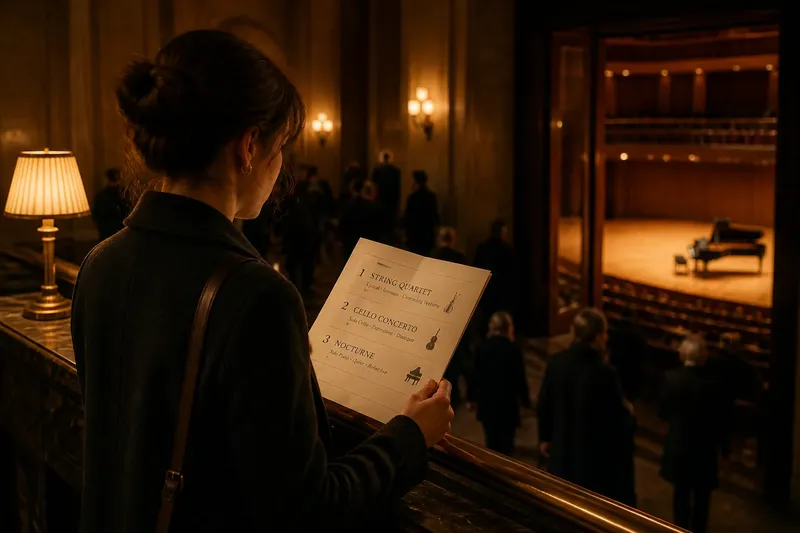
Use the printed order for practical orientation: identify who is performing, notice where the interval falls, and see whether the stage is likely to change. Keep in mind that a program may not explain every logistical or artistic choice.
- Check the performer list: If a soloist or ensemble appears only for one work, expect a personnel change; otherwise, look for the next listed group.
- Check the instrumentation: If a later work adds voices or percussion, expect a possible stage adjustment; if the forces remain similar, do not assume a major reset.
- Check the interval marker: If a break is printed, use it to plan a lobby visit; if none appears, wait for an announced pause before leaving your seat.
- Check the work headings: If a title is followed by separate movements, treat those as parts of one listed work; if separate titles appear, expect distinct program entries.
- Check the venue announcement: If staff say the audience should remain seated, stay in the hall; if they announce an interval, follow the venue’s directions for returning.
- Check the stage between works: If chairs, stands, or instruments move, let the reset finish before expecting the next selection; if the layout stays in place, wait for the performers’ cue.
Concert programme order is most useful as a map of who appears and when the room changes, not as a code that must be solved. Let the printed sequence orient you, and let the music remain free to surprise you.